Coils. Curls. Locs. Afros. Beautiful, professional, and ours.
Afro Nappy celebrates natural Black hair as texture, culture, identity, and living history. Get practical care guidance without ranking straighter hair above tighter coils or treating natural texture as a problem to fix.
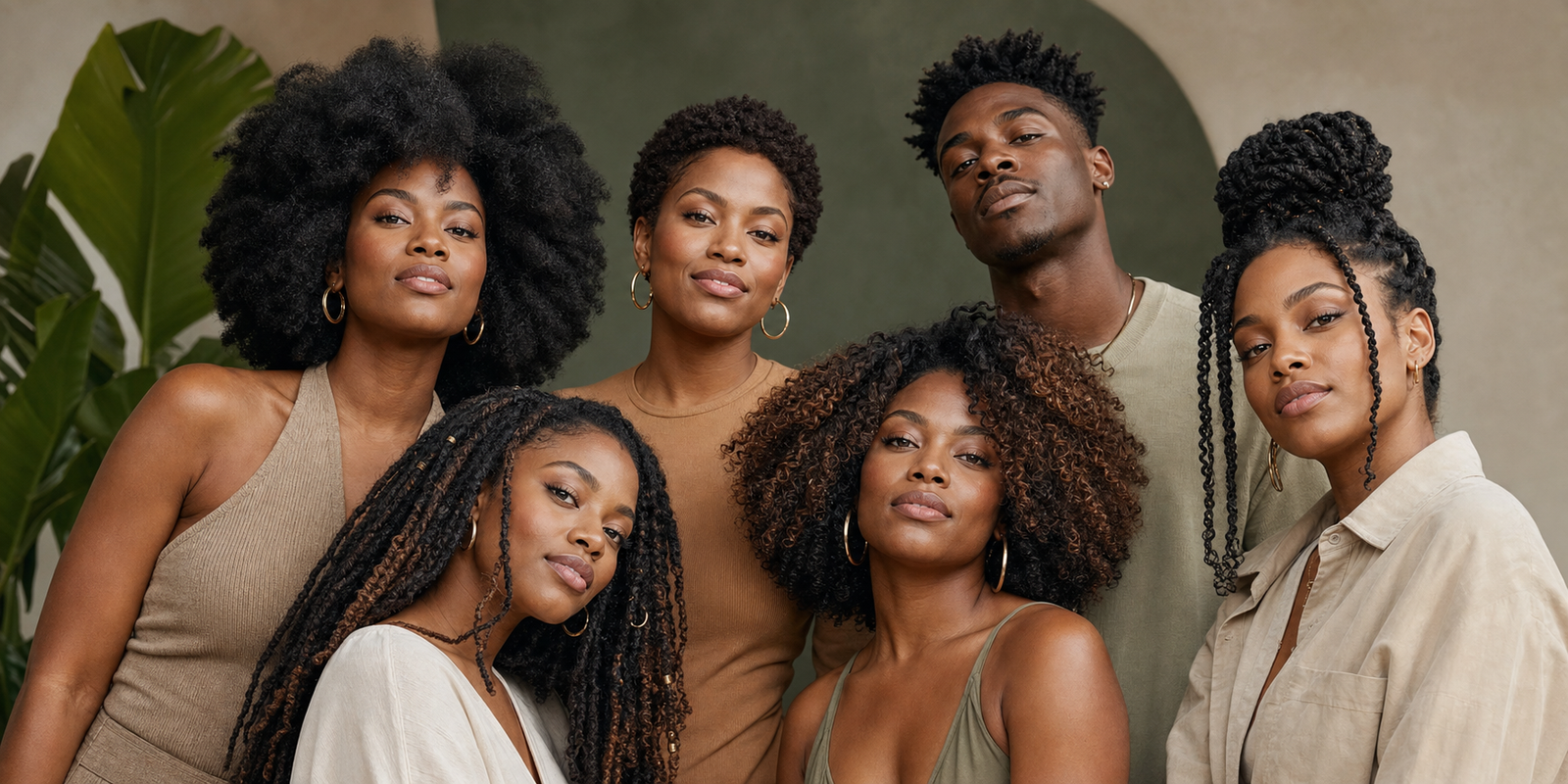
The problem was never the texture. It was the bias.
Natural Black hair has often been judged against Eurocentric beauty and grooming standards. Afros, locs, braids, twists, and tightly coiled textures have been called unprofessional or unacceptable in schools and workplaces. The U.S. Equal Employment Opportunity Commission states that race discrimination can include unfavorable treatment because of hair texture and other characteristics associated with race.
A 2025 study of Black women professionals found that signals of natural-hair acceptance supported authenticity and reduced perceived hair discrimination. Afro Nappy takes a clear position: professionalism is measured by conduct and competence, not by how closely hair resembles a straight texture.
What Afro Nappy stands for
- Natural texture is not a flaw to correct
- Professionalism is not a curl pattern
- Afros, locs, braids, twists, and coils deserve respect
- Personal choice without texture shaming
- Culture and care grounded in credible sources
The full texture spectrum: Types 1 through 4
The familiar hair-typing system groups visible patterns from straight to tightly coiled. AfroNappy centers the curls, coils, locs, and afros often left out of mainstream beauty standards, while recognizing that Black hair can appear across the spectrum and that one head may contain more than one pattern.
Types 1 and 2: straight and wavy patterns
Type 1 hair falls without a defined wave or curl. Type 2 hair forms an S-shaped wave, ranging from loose in 2A to more defined in 2B and stronger, curl-adjacent waves in 2C. These labels describe visible shape, not race, value, health, or beauty.
Type 3: curls and corkscrews
3A usually forms broad spirals, 3B springy ringlets, and 3C tighter corkscrews. Several curl sizes can share the same head, and the pattern may look different after brushing, stretching, humidity, or product use.
Type 4: coils, bends, and zigzags
4A commonly forms small, visible coils. 4B often forms tight bends or zigzags. 4C is usually very tightly coiled and densely packed. Shrinkage can make coily hair look much shorter than its stretched length, but it does not indicate slow growth.
Hair type is only the beginning. Porosity, density, strand thickness, scalp condition, climate, damage, and styling history can matter more when building a routine. No texture ranks above another, and a pattern does not measure beauty, health, professionalism, or manageability. Take the Hair Quiz or explore the Hair Guides.
Turn what you notice into a routine.
Your curl pattern is one clue. Porosity, scalp comfort, styling goals, and how your hair responds to water matter too. Answer a few practical questions for a starter direction, not a diagnosis or one-size-fits-all prescription.
Learn the hair you actually have.
Skip the texture hierarchy and generic routines. Explore practical guidance for cleansing, moisture, detangling, protective styling, locs, children, men, and product buildup.
Porosity: why products sit or sink
Learn how quickly hair takes in and loses water, and why the same cream, oil, or gel can feel different from one head to another.
Curl and coil patterns
Use 3A through 4C as visual descriptions, then look beyond the label to shrinkage, density, porosity, and styling goals.
Wash day without the guesswork
Build a practical order for cleansing, conditioning, detangling, styling, and drying while watching for buildup and breakage.
Protective styles that protect
Prepare the hair, limit unnecessary tension, care for the scalp, and take the style down before protection turns into damage.
Loc care without the myths
Understand starter locs, retwists, washing, drying, buildup, and simple maintenance without treating locs as dirty or unprofessional.
Men's coils, twists, afros, and locs
Straightforward care for short coils, waves, afros, twists, locs, scalp comfort, and the dry skin that can meet the hairline and beard.
Gentler children's hair care
Use patient detangling, low-tension styles, and age-appropriate routines that protect the hair without making wash day a punishment.
Flaxseed gel for soft hold
Learn a simple DIY gel method, how consistency changes hold, why mixtures can flake, and how to store a fresh batch safely.
Flaxseed gel: simple recipe, flexible hold.
Whole flaxseeds release a slippery gel when simmered in water. Many people use the strained gel for slip, curl definition, and soft hold. Results vary with the recipe, application, other products, and individual hair.
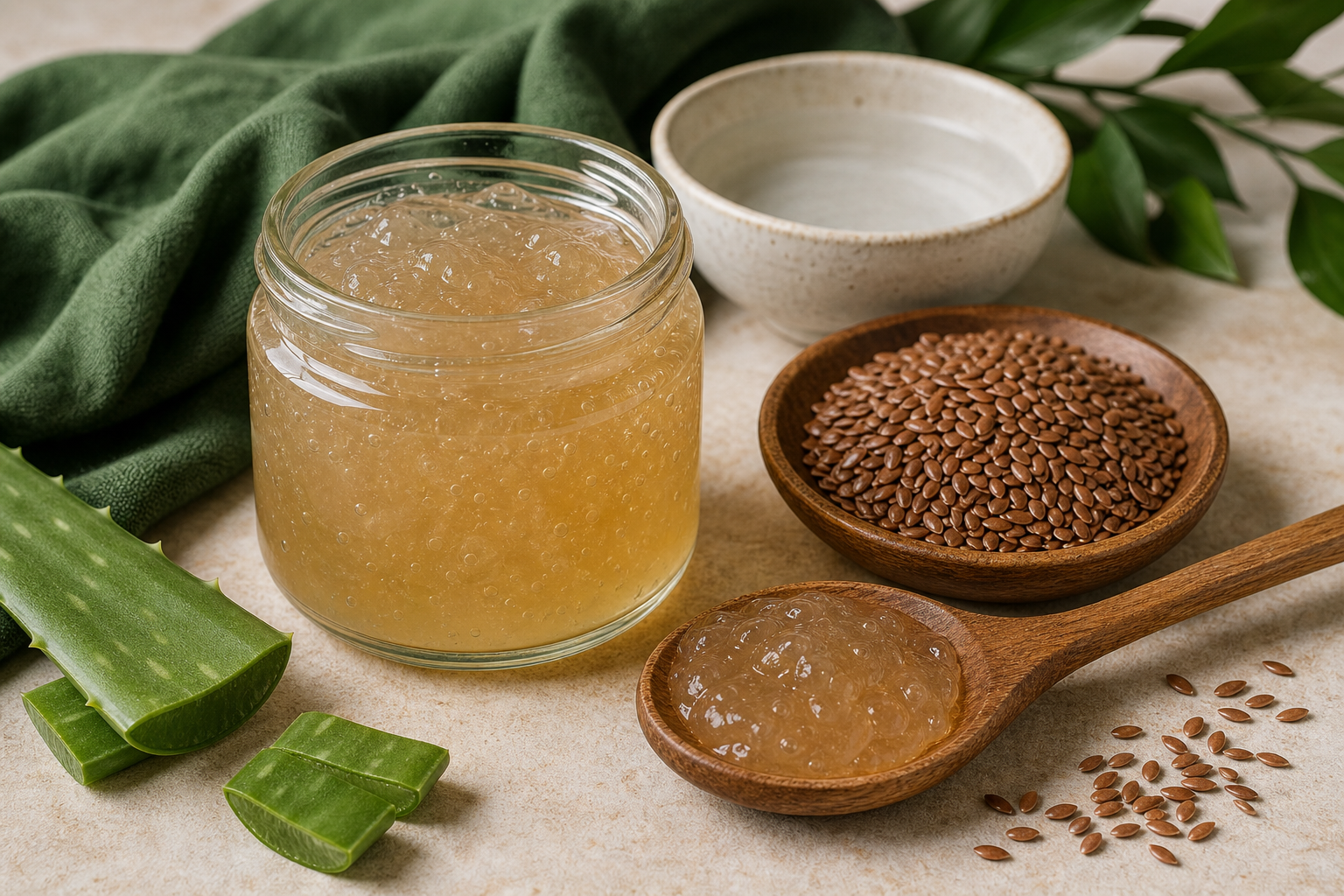
Start with the basic recipe
Simmer 1/4 cup whole flaxseeds with 2 cups water until the liquid begins to thicken. Strain while warm, let it cool, and refrigerate it promptly.
Adjust the hold
A longer simmer usually creates a thicker gel and firmer feel. Test a small amount because heavy application or incompatible leave-ins can cause flaking.
Keep add-ins simple
Extra oils or aloe change the mixture and may not suit every scalp or product combination. A simple batch is easier to test, evaluate, and discard when it changes.
Fresh means perishable: Homemade flaxseed gel does not contain a commercial preservation system. Refrigerate it, inspect and smell it before use, and discard it when the odor, color, or texture changes.
What flaxseed gel can and cannot do
Flaxseed gel can give some hair slip, definition, and soft hold. It is not proven to make hair grow, repair every kind of damage, or work with every leave-in. Patch test if your scalp is sensitive and stop using it if irritation develops.
Want the complete method, storage guidance, and FAQ? Read the Flaxseed Hair Gel Guide.
Flaxseed gel FAQ
Trust first. Products later.
Afro Nappy is building education, the hair quiz, and practical guides before opening a shop. When products arrive, ingredient lists, directions, and claims should be clear enough for customers to make informed choices.
Understand your hair
Learn how texture, porosity, density, scalp condition, and styling habits affect what your hair needs.
Build your routine
Use practical guidance to choose an order for cleansing, conditioning, detangling, styling, drying, and nighttime protection.
Choose products with context
Evaluate products by their verified ingredients, directions, intended use, and how your own hair and scalp respond.
Join a natural-hair platform built with pride.
Join the Afro Nappy waiting list for our upcoming newsletter. We will send interesting articles, practical guidance, cultural stories, and carefully sourced facts about natural Black hair. Enter your name and email, then confirm that you agree to receive updates. You can unsubscribe later.